Alberta gives you four distinct sets of driving conditions and not much warning between them. A vehicle that handles a July highway run to the mountains is not automatically the one you want on a February morning outside Red Deer.
Worth knowing what the year actually throws at you before you choose what to drive.
Winter is longer than the calendar suggests
Plan for winter conditions from roughly October through April, and accept that a cold snap can arrive outside that range.
The specific hazards here are not just snow:
- Black ice. Most common in the early morning, on bridges and overpasses first, because they lose heat from both sides.
- Chinook freeze-thaw. A chinook can lift temperatures well above freezing and then drop them again overnight. Meltwater refreezes into sheet ice on roads that looked clear all afternoon.
- Ground blizzards. Open prairie between towns, no fresh snow falling, and visibility still gone because wind is moving what is already on the ground.
- Compact snow and ruts. City streets that get packed rather than cleared, then rut and glaze.
Winter tires matter more than drivetrain for all of this. There is more on that in our piece on whether AWD is worth it here.
Spring is hard on suspension
The freeze-thaw cycle that makes ice also makes potholes, and the worst of them appear between March and May before crews catch up.
Spring is when people discover bent rims, damaged tires and worn shocks. If you are shopping used in spring, pay attention to how the vehicle tracks and whether it pulls or clunks over rough pavement.
Gravel and sand left over from winter road treatment also sits around into spring. It chips windshields and paint, particularly on the QEII where speeds are high.
Summer means construction and wildlife
Alberta compresses most of its road work into a short season. Expect lane reductions and gravel stretches on major highways from May through September.
Deer, moose and elk are most active around dawn and dusk. Moose in particular are a serious collision risk because of their height, and they are common through central and northern Alberta.
If you drive rural highways at night regularly, that is a genuine argument for a vehicle with good headlights and for keeping your speed sensible after dark.
The mountain corridor is its own thing
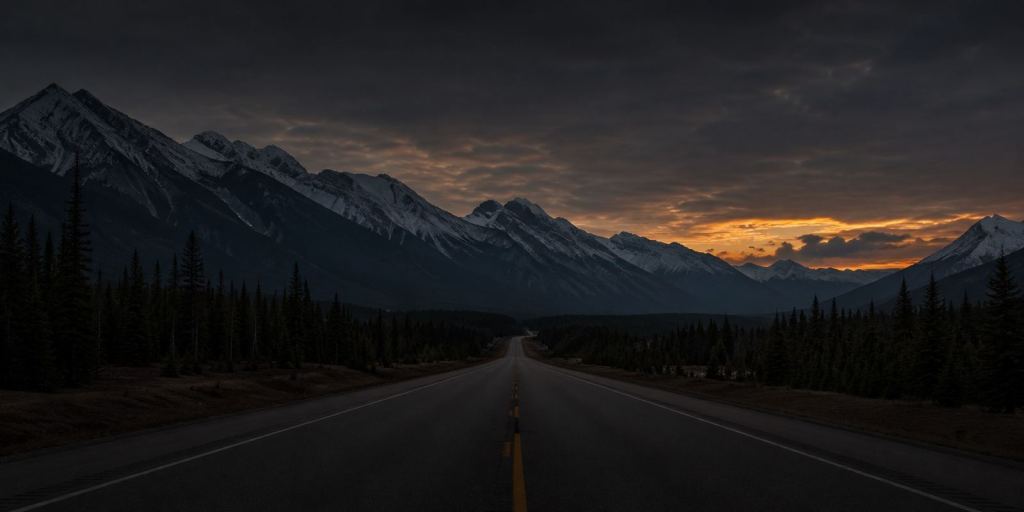
Highway 1 west of Calgary and the Icefields Parkway involve sustained grades in both directions. Long descents heat up brakes, and riding them down a pass is how people arrive at the bottom without much left.
Use a lower gear on long descents rather than steady braking. If you tow, this matters considerably more.
Mountain weather also changes fast. Conditions at Canmore tell you very little about conditions at the Continental Divide.
Gravel and rural roads
A large share of Alberta driving happens off pavement, on range roads, acreage driveways and lease roads. Gravel is hard on paint, windshields and undercarriage, and it rewards ground clearance.
If your regular driving includes unpaved roads, that should shape your vehicle choice more than almost anything else on the spec sheet.
What this means when you are shopping
- Budget for winter tires as part of the vehicle cost, not an extra
- Ground clearance matters if you leave pavement or deal with unplowed streets
- Remote start, heated seats and a heated steering wheel stop being luxuries in January
- Check the underside of any used vehicle for salt damage
- Good headlights are a real safety feature on rural highways
If you want help matching a vehicle to the way you actually drive, start your pre-approval and tell us what your typical week looks like.
 Easy Drive Alberta